A warning light appearing on your dashboard tends to produce one of two responses: immediate anxiety, or a mental note to deal with it eventually. In reality, most lights fall somewhere between those two extremes. Some require you to stop driving promptly. Others can wait until your next scheduled appointment. Knowing the difference helps you respond proportionally — and avoid either ignoring something genuinely important or worrying unnecessarily about something minor.
This guide covers the most common lights you'll encounter, roughly organized by urgency.
Understanding the Colour System
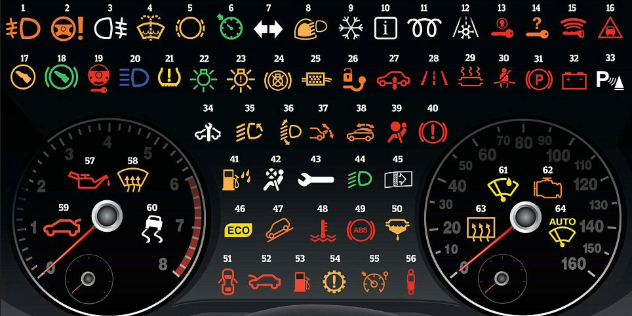
Manufacturers largely follow a colour convention for dashboard indicators:
- Red — Requires immediate attention or indicates a critical system problem. In some cases, you should stop the vehicle safely as soon as possible.
- Amber/yellow — Something needs attention, but it's generally not an immediate emergency. Address it within a reasonable timeframe.
- Green or blue — Informational. Tells you a system is active (headlights, cruise control, turn signals, etc.). Not a problem indicator.
This isn't universal — manufacturers vary, and some use amber for maintenance reminders and others use them for moderate faults — but it's a useful starting framework.
Red Lights: Act Promptly
Oil Pressure Warning (Red Oil Can)
This is one of the most serious lights your vehicle can display. Low oil pressure means engine components aren't being lubricated adequately. Continuing to drive with this light on can cause severe, often catastrophic engine damage within minutes.
If this light illuminates while driving, pull over safely as soon as you can, shut the engine off, and check the oil level on the dipstick. If the level is correct and the light is still on when you restart, don't drive it. Call for assistance. If the level is very low, add oil before restarting — but the underlying reason for low oil still needs investigation.
Engine Temperature Warning (Red Thermometer)
Your engine is overheating. This can happen due to a coolant leak, a failed water pump, a stuck thermostat, a blown head gasket, or a number of other causes. Like the oil pressure light, continuing to drive risks serious and expensive engine damage.
Pull over and let the engine cool completely before checking the coolant level. Do not remove the radiator cap while the engine is hot — the system is pressurized and coolant can spray out and cause burns. Once it's cooled, check the reservoir level. If it's empty or very low, you likely have a leak that needs diagnosis before driving further.
Battery / Charging System Warning
This light (typically a battery symbol) means the charging system isn't maintaining battery voltage properly. The most common causes are a failing alternator, a broken serpentine belt (which drives the alternator), or occasionally a battery that's failing and pulling too much current to charge properly.
When this light comes on, your vehicle is running on battery power alone. Depending on how much charge remains and how much electrical load your vehicle has (headlights, climate control, heated seats), you may have anywhere from a few minutes to half an hour before the vehicle loses power entirely. Turn off non-essential electrical loads and get to a shop or safe location promptly.
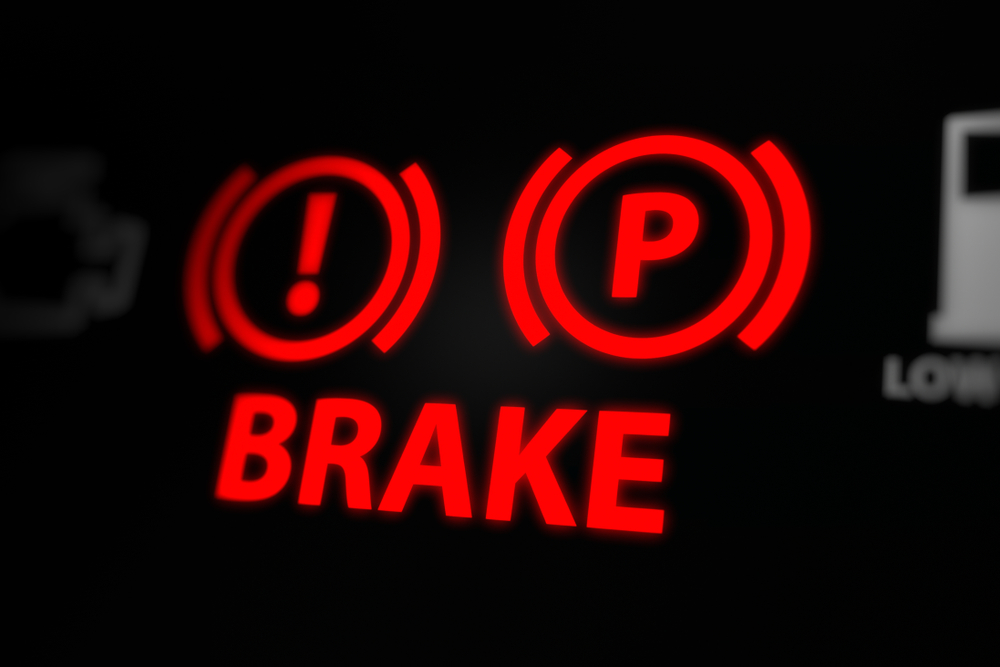
Brake Warning Light (Red BRAKE)
As covered in our brake system article, this can mean the parking brake is applied, brake fluid is low, or there's a hydraulic pressure problem. If the parking brake is off and this light is on, check your fluid level. Low fluid warrants prompt attention.
Amber Lights: Schedule an Inspection
Check Engine / Malfunction Indicator Lamp (MIL)
This is the light that generates the most questions — and the most myths. The engine control module (ECM) has detected a fault in one of the monitored systems. That could be something as minor as a loose gas cap (which allows evaporative emissions to escape and triggers an EVAP code) or as significant as a misfire that could damage the catalytic converter if left alone.
A steady check engine light typically means a fault has been detected and logged. A flashing check engine light is more serious — it usually indicates an active misfire severe enough to cause damage and warrants stopping or significantly reducing speed immediately.
The only way to know what a check engine light means is to read the fault code with a scan tool. The code gives you a starting point for diagnosis — not a direct parts recommendation. A code pointing to the oxygen sensor circuit, for example, could mean the sensor itself, a wiring issue, an exhaust leak near the sensor, or a fuelling problem. Diagnosis determines which.
Transmission Temperature Warning
Your transmission fluid is overheating. This commonly occurs when towing heavy loads, driving in stop-and-go traffic in hot weather, or when transmission fluid is degraded and needs replacement. Reduce load if possible, and if the light persists, have the transmission fluid level and condition checked.
Low Fuel Warning
You know this one. Most vehicles have 40–80 km of range remaining when this light comes on, though it varies significantly by vehicle and driving conditions. Consistently running on a low tank can cause the fuel pump (which sits in the tank and is cooled by fuel) to run hotter than designed, potentially shortening its life.
Tire Pressure Monitoring System (TPMS)
One or more tires is significantly underinflated — typically 25% or more below the recommended pressure. This doesn't pinpoint which tire, though some vehicles display individual pressures. Check all four tires and adjust to the door jamb specification. If a tire is losing pressure consistently, it likely has a slow puncture that needs repair.
Note that TPMS sensors can also fail and trigger the light when tire pressures are actually fine. If you've checked all tires and they're correctly inflated, the sensor itself may need service or replacement.
ABS Warning Light
The anti-lock braking system has a fault. Your base brakes will typically still function normally, but ABS (and usually traction control and stability control as a result) won't operate. This means in hard braking situations, the wheels could lock up and you'd lose steering ability. It's not an emergency, but it should be diagnosed, particularly in wet or slippery conditions.
Traction Control / Stability Control
If this light comes on briefly while accelerating on a slippery surface, the system is working as intended. If it stays on continuously, there may be a fault with the system, or it's been manually disabled. A persistent light should be investigated.
Maintenance Reminder Lights
Many vehicles display service reminder messages (often "Oil Change Required," "Service Due," or a wrench symbol) based on mileage intervals or engine operating data. These are not fault codes — they're mileage counters that need to be reset by a technician after the service is performed. If you've recently had an oil change and this light is still on, it likely just wasn't reset.
A Note on Generic Code Readers
Inexpensive OBD-II code readers (the type you can buy at any auto parts store for under $50) can read basic powertrain fault codes. They're useful for getting a general idea of what system triggered a check engine light. What they can't do is read manufacturer-specific enhanced codes, access ABS or airbag modules on most vehicles, display live data with the same depth as professional equipment, or replace actual diagnosis.
If a parts store reads your code and recommends replacing a specific sensor, that's one possibility worth investigating — but it's not a diagnosis. The sensor may simply be reporting accurately what a different failed component is doing to the system.
When In Doubt, Get It Scanned
A diagnostic appointment at Triplet typically starts with pulling the stored codes and walking through the live data. For most straightforward fault codes, we can give you a clear picture of what's happening and what the repair options are within the hour. If you've had a warning light come on and you're unsure how serious it is, that's the right starting point.