Brakes don't usually fail without warning. In most cases, the system gives you signs well before something becomes dangerous — if you know what to pay attention to. This guide covers the most common brake symptoms, what they typically indicate, and when the situation warrants prompt attention versus routine scheduling.
How the Brake System Works (Briefly)
When you press the brake pedal, hydraulic pressure is transmitted through brake fluid to calipers at each wheel. The calipers squeeze brake pads against a rotating disc (rotor), creating friction that slows the vehicle. Most modern vehicles also have rear disc brakes, though some older or smaller vehicles still use drum brakes at the rear.
The key components you'll hear about are: pads, rotors, calipers, and brake fluid. Each can develop its own set of symptoms when something goes wrong.
Squealing: The Built-In Warning
A high-pitched squeal when braking — especially under light pedal pressure — is usually the brake wear indicator doing exactly what it's designed to do. Brake pads have a small metal tab embedded near the backing plate. When the friction material wears down to roughly 2–3 mm, the tab contacts the rotor surface and produces that distinctive squeal.
This is a deliberate feature, not a defect. It's telling you that your pads are getting thin and you should book an inspection. How much time you have depends on your driving pattern — mostly highway driving gives you more cushion than heavy city stop-and-go use.
Note that pads can also squeal briefly on first use in the morning, especially in cold or damp conditions. That usually goes away after the first few stops and isn't a concern. Persistent squealing during braking is the pattern to pay attention to.
Grinding: Act on This Promptly
Grinding during braking — a harsh, metallic sound — typically means the friction material has worn through completely and you're now stopping with metal pressing directly on metal. The rotor surface is being scored, which means a job that would have been pads only has now likely become pads plus rotor replacement.
It's worth acting on grinding sounds quickly. Continuing to drive this way accelerates rotor wear and can affect caliper function. In severe cases, the caliper piston itself can begin to contact the rotor. That's a considerably more expensive repair than pads and rotors.
If you hear grinding when braking, book an inspection within the next day or two. It's not necessarily dangerous on the spot, but the situation deteriorates with every stop.
Pulsating or Vibrating Pedal
A brake pedal that pulses rhythmically underfoot — or a steering wheel that shakes when you brake — usually indicates rotor runout or thickness variation. Rotors can warp from heat cycling, especially if the vehicle regularly makes repeated hard stops from high speed, or if the brakes are applied while a hot rotor is cooling (like driving through a puddle immediately after a long hill descent).
Slight rotor runout can sometimes be corrected by resurfacing on a brake lathe, provided the rotor has enough material remaining to be cut safely. Rotors that are at or below minimum thickness, or that have significant scoring, are more cost-effectively replaced. We'll measure and advise when we do the inspection.
Soft or Spongy Pedal
A brake pedal that travels further than usual before resistance builds, or that feels mushy underfoot, is often a sign of air in the brake lines. Air compresses where fluid doesn't, so even a small air pocket can noticeably change pedal feel.
How does air get in? Usually through a brake fluid leak — at a caliper, a brake line connection, or the master cylinder — or following a brake service where the system wasn't properly bled. A soft pedal can also develop gradually as brake fluid absorbs moisture over time, lowering its boiling point.
If your pedal sinks toward the floor under steady pressure, or if you need to pump the pedal to get normal braking, this should be addressed before driving the vehicle further.
Vehicle Pulling to One Side Under Braking
If the vehicle tracks straight at speed but pulls toward one side when you apply the brakes, the most common causes are uneven pad wear, a seized caliper, or a restricted brake hose on one side. A caliper that isn't releasing fully after braking will also cause the vehicle to pull during acceleration and can cause that wheel's brakes to overheat.
Pulling can also result from a suspension or alignment issue that becomes apparent under braking load rather than braking itself — a technician can usually distinguish between the two with a road test and an undercarriage inspection.
Brake Warning Light
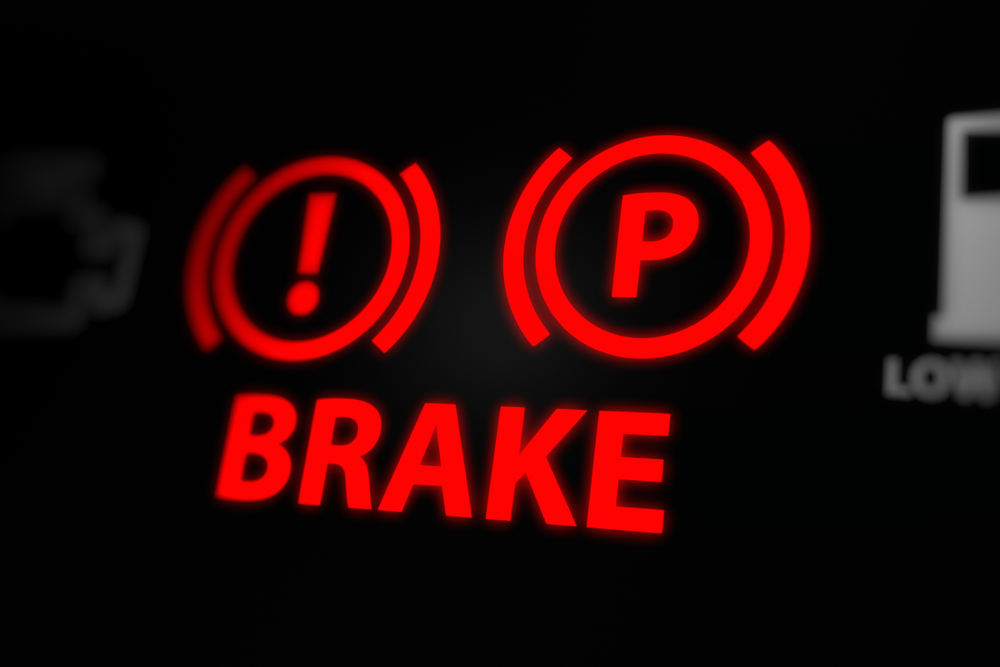
There are two different brake-related lights on most modern vehicles:
- The red BRAKE light — can indicate the parking brake is applied, brake fluid is low, or there's a hydraulic pressure issue. If it illuminates while driving with the parking brake off, check your fluid level. Low fluid can mean a leak or worn-down pads (pads wear pushes fluid into the caliper, lowering the reservoir level).
- The ABS light — indicates a fault in the anti-lock braking system. The base brakes typically still work normally, but ABS won't function. The vehicle will also usually disable traction control and stability control when ABS is faulted. This should be diagnosed, but it's not an immediate safety emergency in the way a soft pedal would be.
Brake Fluid: Often Overlooked
Brake fluid is hygroscopic — it absorbs moisture from the surrounding air over time through microscopic permeation of rubber components. As moisture content increases, the fluid's boiling point drops. Under heavy braking conditions, fluid that's absorbed significant moisture can boil in the caliper, creating gas bubbles that compress and cause brake fade or a suddenly soft pedal.
Most manufacturers recommend testing or replacing brake fluid every 2–3 years regardless of mileage. A refractometer test can measure moisture content quickly. It's a simple, inexpensive check worth adding to your service schedule.
When to Book an Inspection
As a general guideline:
- Routine squeal (wear indicator) — Book within the next 2–4 weeks
- Grinding sounds — Book within 1–2 days
- Pulsating pedal or vibration — Book when convenient, but don't defer more than a few weeks
- Soft or spongy pedal — Have this looked at before driving further if possible
- Pulling under braking — Book within a week or two
- Red BRAKE light while driving — Check fluid level; if it's low, have it inspected promptly
If you're uncertain, a brake inspection takes under an hour in most cases, and we can tell you exactly what's there and what, if anything, needs attention.